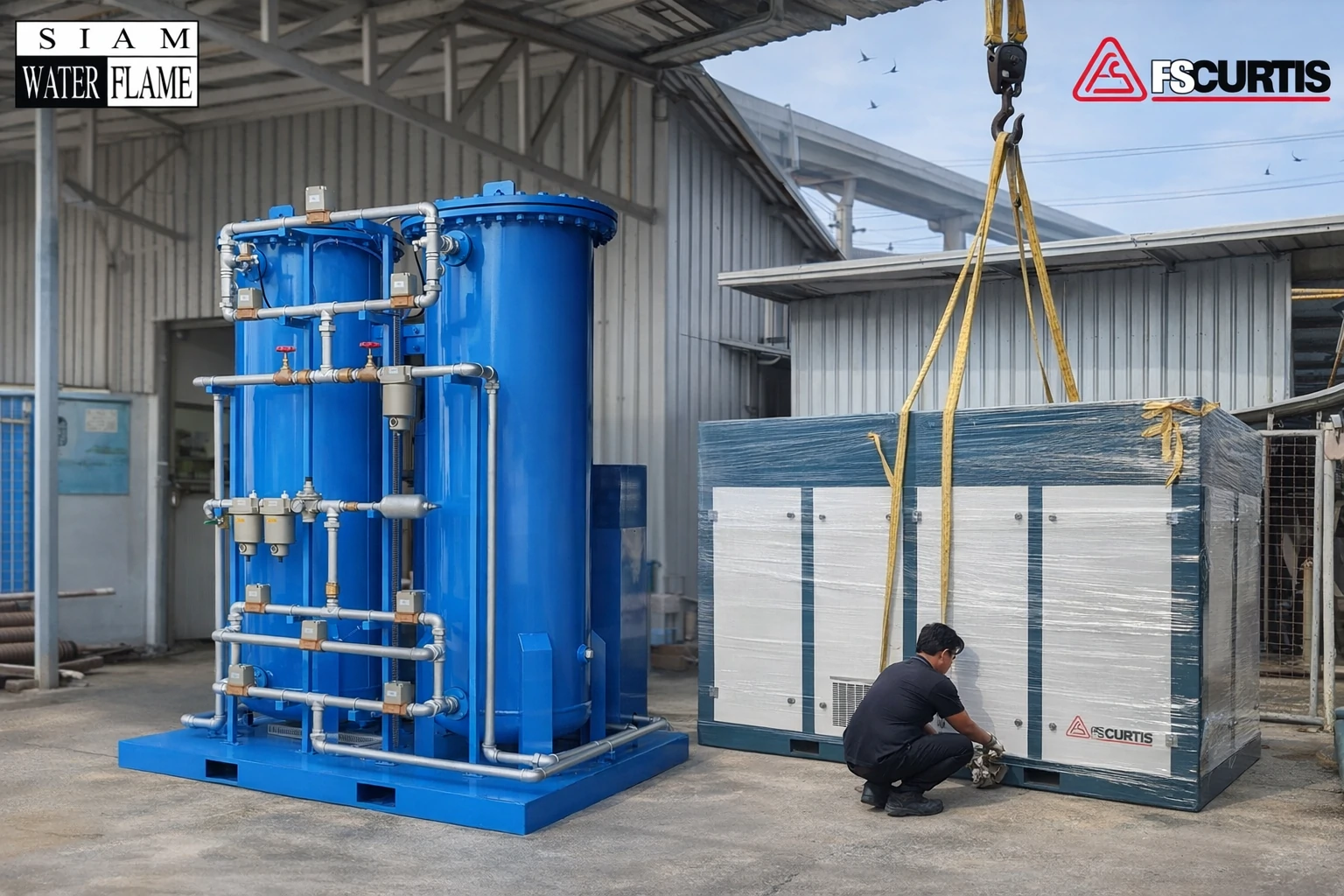
Compressed Air Systems in Industrial Plants The Invisible Heart of Production
What Is a Compressed Air System and Why Is It So Important?
In the world of manufacturing whether in the metal, automotive, food, or electronics industries compressed air is the essential energy that drives machines to operate smoothly and precisely.
This is especially true for pneumatic equipment, which requires rapid response times and consistent force.
A compressed air system is not just a supportive element in the production line. It is more accurately described as the “circulatory system” of a factory, delivering energy where it’s needed to keep everything running efficiently.
Key Components of an Industrial Compressed Air System
Air Compressor
The main source of compressed air generation, powering the entire system.
Air Dryer
Removes moisture from the air, protecting pipelines and machinery from corrosion and damage.
Filters
Eliminate oil, dust, and other contaminants to ensure clean, high-quality air supply.
Receiver Tank
Acts as a buffer to stabilize air pressure and stores air for continuous usage.
Piping System
Distributes air evenly throughout the plant with appropriate pressure control.
Control & Monitoring Systems
Automated systems for monitoring pressure, air volume, and the performance of all components.
Common Issues and Their Impact
Air Leaks
The number one source of waste can account for 20–30% of total air produced.
Insufficient Drying
Leads to equipment damage and unplanned production downtime.
Unstable Air Pressure
Affects product quality and reduces the lifespan of machines.
Excessive Energy Consumption
Often caused by poorly designed or outdated systems.
Good Design and Maintenance = Real Cost Savings
Choose the right compressor size and model based on actual usage needs.
Regularly inspect and maintain the piping system to prevent leaks and pressure drops.
Invest in intelligent control systems such as VSD (Variable Speed Drive) and IoT monitoring for real-time efficiency.
Implement a structured Preventive Maintenance (PM) plan to avoid costly downtime.
A Great Compressed Air System Doesn’t Just “Make Air” It Makes Profit
By reducing operating costs, improving system stability, and extending the life of equipment, a well-designed compressed air system becomes a strategic asset. In today’s highly competitive market, where efficiency and sustainability drive
success, compressed air is no longer invisible it’s essential.
Compressed Air Systems in Industrial Plants The Invisible Heart of Production
What Is a Compressed Air System and Why Is It So Important?
In the world of manufacturing whether in the metal, automotive, food, or electronics industries compressed air is the essential energy that drives machines to operate smoothly and precisely.
This is especially true for pneumatic equipment, which requires rapid response times and consistent force.
A compressed air system is not just a supportive element in the production line. It is more accurately described as the “circulatory system” of a factory, delivering energy where it’s needed to keep everything running efficiently.
Key Components of an Industrial Compressed Air System
Air Compressor
The main source of compressed air generation, powering the entire system.
Air Dryer
Removes moisture from the air, protecting pipelines and machinery from corrosion and damage.
Filters
Eliminate oil, dust, and other contaminants to ensure clean, high-quality air supply.
Receiver Tank
Acts as a buffer to stabilize air pressure and stores air for continuous usage.
Piping System
Distributes air evenly throughout the plant with appropriate pressure control.
Control & Monitoring Systems
Automated systems for monitoring pressure, air volume, and the performance of all components.
Common Issues and Their Impact
Air Leaks
The number one source of waste can account for 20–30% of total air produced.
Insufficient Drying
Leads to equipment damage and unplanned production downtime.
Unstable Air Pressure
Affects product quality and reduces the lifespan of machines.
Excessive Energy Consumption
Often caused by poorly designed or outdated systems.
Good Design and Maintenance = Real Cost Savings
Choose the right compressor size and model based on actual usage needs.
Regularly inspect and maintain the piping system to prevent leaks and pressure drops.
Invest in intelligent control systems such as VSD (Variable Speed Drive) and IoT monitoring for real-time efficiency.
Implement a structured Preventive Maintenance (PM) plan to avoid costly downtime.
A Great Compressed Air System Doesn’t Just “Make Air” It Makes Profit
By reducing operating costs, improving system stability, and extending the life of equipment, a well-designed compressed air system becomes a strategic asset. In today’s highly competitive market, where efficiency and sustainability drive
success, compressed air is no longer invisible it’s essential.
Compressed Air Systems in Industrial Plants The Invisible Heart of Production
What Is a Compressed Air System and Why Is It So Important?
In the world of manufacturing whether in the metal, automotive, food, or electronics industries compressed air is the essential energy that drives machines to operate smoothly and precisely.
This is especially true for pneumatic equipment, which requires rapid response times and consistent force.
A compressed air system is not just a supportive element in the production line. It is more accurately described as the “circulatory system” of a factory, delivering energy where it’s needed to keep everything running efficiently.
Key Components of an Industrial Compressed Air System
Air Compressor
The main source of compressed air generation, powering the entire system.
Air Dryer
Removes moisture from the air, protecting pipelines and machinery from corrosion and damage.
Filters
Eliminate oil, dust, and other contaminants to ensure clean, high-quality air supply.
Receiver Tank
Acts as a buffer to stabilize air pressure and stores air for continuous usage.
Piping System
Distributes air evenly throughout the plant with appropriate pressure control.
Control & Monitoring Systems
Automated systems for monitoring pressure, air volume, and the performance of all components.
Common Issues and Their Impact
Air Leaks
The number one source of waste can account for 20–30% of total air produced.
Insufficient Drying
Leads to equipment damage and unplanned production downtime.
Unstable Air Pressure
Affects product quality and reduces the lifespan of machines.
Excessive Energy Consumption
Often caused by poorly designed or outdated systems.
Good Design and Maintenance = Real Cost Savings
Choose the right compressor size and model based on actual usage needs.
Regularly inspect and maintain the piping system to prevent leaks and pressure drops.
Invest in intelligent control systems such as VSD (Variable Speed Drive) and IoT monitoring for real-time efficiency.
Implement a structured Preventive Maintenance (PM) plan to avoid costly downtime.
A Great Compressed Air System Doesn’t Just “Make Air” It Makes Profit
By reducing operating costs, improving system stability, and extending the life of equipment, a well-designed compressed air system becomes a strategic asset. In today’s highly competitive market, where efficiency and sustainability drive
success, compressed air is no longer invisible it’s essential.

Air Compressors NxHE Series Two-Stage 90-250k

Air Compressors รุ่น ER Series 15-120kW

Air Compressors Nx Series 4-260kW